Thursday, 27 February 2014

Design Ethnography


Design and Technology
Brian Lonranger
21/02/14


The top down approach of looking at a design problem is popular nowadays as it has a way of understanding minute problems that compound over the course of a design process. These compounded problems are often those which cause a product to fail. It is therefore important to get to the root issues early and have a deeper look.


Participant observation involves living in the culture for a long period, .5 to 2 years, to understand fully who you are designing for. Ford used a suit that restricted movement and vision to design an old person friendly car - it turned out to be one of the most successful car designs for that particular user. Observing someone with a clipboard (being an outsider) will not be natural and the person won't act normally... 


Brian claimed elderly people don't want to learn new systems, they just want to enjoy old age and the way things are. In my experience this is in fact the opposite: my Granny loves new technology and goes to computer classes and my Grandpa just bought a new laptop for Christmas! 

Grounded theory is the idea of going into the field with limited knowledge. Don't form research questions to start with, but do a reccy of the field with no preconceptions and then come up with questions after. A useful interview technique is having 20 questions you want answered. Know what you are actually asking, what you actually want to find out. Generalise some questions - open and closed. Open = walk me through your day. Closed = do you like the pendant. Some examples of good open questions are: What are the challenges you face in the day? What would you change about your day? Check off the 20 questions by just letting them talk - maybe ask only 3 very open ended questions. Then at the end can ask any specifics if one of the 20 haven't been asked yet.

Be participant. If you want to design fishing gear for Alaskan Crab Fisherman then go and become an Alaskan Fisherman... Method of note taking: What you're doing, where, who, when. Half put nothing but observations - facts. Opposite side, anything that is an interpretation (qualitative) - feelings, what others may be feeling. Flesh out notes after the interview - very soon after for the best recollection.

Friday, 14 February 2014

Aesthetics and Technology

Design and Technology
Hugh Pizey
13/02/14


The black box. Somewhat mysterious sounding. The ultimate example of form following function. You can find black boxes in fighter jets, helicopters and many computing applications. They are often used to house electronics and be stored somewhere where they won't be seen for years to come. 

Many designs follow this 'form following function' way of thinking, especially in the field of engineering. Most products are made for a function; to aid the user in some way or another while performing a task. Ultimately, we want products that do what they are supposed to, don't we? 


Think of the humble lamp: it's function is to shine light, so why is there thousands of lamps available in all shapes and sizes?

A quick Google image search will present you with a massive range of forms for a lamp. Yet all perform the same task, providing light for a room by converting electricity. Pixar transformed the humble lamp into a loveable character (as they have a habit of being able to do, may I add). There is such a range in lamp forms and styles, because we each are individuals and have a different taste in what we like. This might seem like the most obvious statement, but lets consider it.


If the look of something is so important, should function not follow form? Should the form of the cars we buy be determined by how they look and feel, not how much bhp or torque produced? Should the chairs we use be beautiful rather than practical.

This may be an extreme way of looking at this, but it certainly offers a new way of thinking. When a design is being produced, should the form just be an afterthought? Or should it be the most important factor? Hmm...

Friday, 7 February 2014

2001: A Space Odyssey (1968)


Design and Technology Film
06/02/14


Well, what to say about this film. Seeing this film for the first time in 2014 - 13 years after when it was meant to be set - probably diminished the impact of the futuristic ideas that went into the film. However, the creativity and vision of the writers of what the future may look like was very impressive. Some of the ideas were so revolutionary at the time that it is no surprise this film has been given the 'cult classic' label. The creativity of the writers to look 33 years into the future and imagine what life may look like is the most interesting part of this film: commercial space flight, video and audio calls to earth, communities in space and on the moon, voice recognition, trips to Jupiter and grip socks.


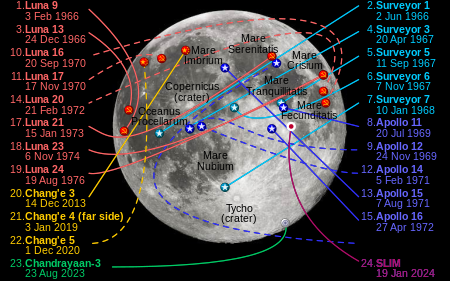
Considering that this film came out in the early stages of the space race and a year before Neil Armstrong, Buzz Aldrin and Michael Collins landed the first manned mission to the moon, Apollo 11, on the 20th July 1969. It is no wonder this film was such a success considering the hype that was around at the time about space travel and what may come of it.

It was very interesting to see what they thought cameras would be which they did not get right, but they were certainly accurate when thinking about tablets and screens as well as two-way video calling. Such technologies have been made widely available only recently which shows great insight from the writers. Human hibernation, trips to Jupiter, commercial space flight are all yet to be realised, but we are certainly closer to these things than ever before.


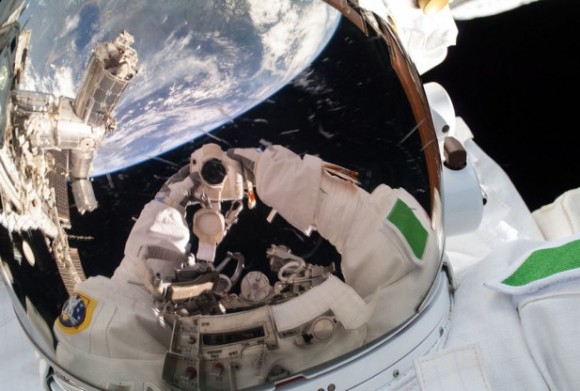
The idea of living in space is an interesting one and I touched on it in the previous post about Marc Newson. At the moment we are not at the stage of commercial space flight and so no where near community living in space. However, around 3 astronauts are on the International Space Station at once living for a period of normally 6 months. Supply ships come to provide food and other resources to the astronauts. In this sense the idea of living in space has been realised, but not in the same capacity as in the film. Another concern about living in space is that scientists believe that living in space long term can be detrimental to your health. Bone, joint and weight issues of those in space have to be monitored and recovery is required once back to earth for the astronauts. This leaves me sceptical as to the practicalities of living in space and whether this can be realised even in my lifetime.


One of my main reasons for not getting excited about living in space is not seeing the point. Besides scientific discovery and it being 'cool' for a while, there is not much attraction. Most people choose not to live in places that are hard to live in like deserts, oceans and wastelands. Therefore the idea of living in a place that requires space suits, constant shipping in of supplies and a major lifestyle change (for the worse in my opinion) does not appeal.

Friday, 31 January 2014

The Great Pacific Garbage Patch


Environmental impact. A phrase that even 15 years ago would be responded to with raised eyebrows and a questionable look. Nowadays however, everyone is becoming increasingly aware of the impact they are having on the world. Natural resources are being used up, waste is piling up and the air gets increasingly less clean.
What's the issue you may ask? Well, what does the future hold for our quality of living. Living for today for too long has caused major environmental damage which may never be fully recovered from. I realise this paints a bleak picture and has a 'doom' feel to it, but the following may just surprise you...


The Great Pacific Garbage Patch:


This is a collection of marine debris in the North Pacific Ocean caused by irresponsible disposal of rubbish. Don't get me wrong, this isn't a massive mass of whole products floating about, but large areas of tiny microplastics. Much of the garbage in the sea is not biodegradable and the materials break down causing tiny pellets of plastic to float in the sea. These pellets are often eaten by fish which are then eaten by humans, causing the cycle to be completed back to us. No country wants to take responsibility for the issue since it is so far from any coastline, but some international groups are trying to prevent it from growing.


Scientists have collected up to 750,000 bits of plastic in a single square kilometre (or 1.9 million bits per square mile) of the Great Pacific Garbage Patch.

It isn't just fish either: many birds, turtles and sea lions are affected too (to name but a few...)

The problem is that everywhere we look nowadays we see plastic: laptops, lights, bins, cars, trainers. Take a look for yourself - you can't avoid the stuff. Plastics are great for so many different applications due to it's diverse properties and ease of mass manufacturing. However, how to responsibly dispose of it once the product life is over is still not a fully answered question. Recycling is of course a good thing, but with only a minority of plastics able to be recycled, much is still just thrown out. Many councils and states provide recycling services, but they are far from comprehensive: only allowing certain plastics to be recycled.


So the solution:

Well, I wish it was that simple. With the developed world showing little signs of reduction in waste and the rest of the world ever increasing theirs in a strive for development, it is a complex issue to say the least. Recycling, reusing and reducing are certainly good measures, but drastic changes have to be made to preserve our oceans, wildlife and natural world. I feel this has to come from the top down, but even small changes in the daily life of the average person will help. 

I certainly can't give any answers, I wish I could. Challenges I can do: can you watch what you purchase, ask yourself if you really need what it is you are buying and is there a more responsible alternative? Can you reduce the rubbish you throw out and use recycling where possible? Can you encourage others to do likewise?

At the end of the day, it is our future we are looking out for...

Magnitudes


Design and Technology
Ben Craven
30/01/14


It's difficult to get people to give you an estimate, but knowing roughly how big the numbers will be - how many digits even - can be really useful. Whether it is cost, force or power, putting the numbers into a project as soon as possible is important. 

Using ingenuity and logical thinking to get a ball-park figure to see if the project or idea is even feasible is key at an early stage. It may not be that accurate, but even finding out if the product price will be 100's or 1000's may make or break a project. It is important to remember how optimistic or pessimistic you have been in your figures as this can determine your conclusions. If you have purposely overestimated for the worst case scenario then remember this at the end.

It is a very useful skill to be able to estimate values quickly and get an idea of whether the value seems feasible for whatever application it may be. Even quick calculations in shops of the expected price can be a useful exercise to check you're paying the right amount.

Deciding early in the design process whether the idea has the potential to work - whether in terms of costing, power consumption or dimensions - will save a lot of time. Developing a concept to a detailed design phase to then discover it is not feasible would be expensive in terms of money and time.

Wednesday, 29 January 2014

Marc Newson - Urban Spaceman


Design and Technology 
Marc Newson - Urban Spaceman (2008)
BBC imagine documentary


www.marc-newson.com 
(all images taken from this website unless stated)


Marc Newson has designed everything. You may not have heard about him yet, just as in my ignorance I hadn't, but you should have. Design ranging from art sculptures to furniture to coat hangers to aeroplanes, he has done it all. Some of his pieces have sold for record prices in auction houses around the world. He gets paid to think outside the box and change the constraints on design that companies have put on themselves.

It is an interesting concept, being paid to think differently. Sometimes in society thinking differently can be looked down upon; not being the same as everyone else may make you an outcast. Here, however, we have a man who has built his life upon thinking differently to the norm, and the designs he produces because of it. As he said himself "A good designer has to be a geek, interested in fine details."

As an example of his almost sculptural design work: this is the Lockheed Lounge which he designed while studying jewellery at art school. In 1986 they were worth £1000, in 2008 one was sold for $1.5million. Crazy. Or is it?

You may be wondering who buys pieces like this, I certainly was.

You will not be surprised to hear that the answer is wealthy people, very wealthy people. Three men, two from the U.S.A and one from London who have a Lockheed Lounge were interviewed on the programme. One enjoyed the synthesis of the piece between design and art, one thought the piece was sexy, and the other loves pop art and Marc's designs make him aroused... Interesting.

I for one am an appreciator of design, art and the creative mind. Design that wows is a marvel to behold and I have massive respect for any designer who can produce that feeling in a person. As for artwork and design being sexy, well, not for me.

Marc is often employed by large companies to come in and change their thinking: "Sometimes you need a meteorite to come in and blow up all preconceived thinking." I couldn't agree more. Often companies and individuals get so set in their ways that their creativity is stifled due to restraints they have put on themselves. Gaining an outside perspective can be crucial for moving forward and designing for the future. 


One of Marc's main motivations and passions is space. A lot of his designs, whether purposefully or not, have a space-age look about them. In 2007 he designed a concept jet for space tourism and travel for EADS Astrium. At an estimated £150,000 a trip to experience zero gravity, would you go? One of Marc's motivations if for faster travelling across the world, achieving this by leaving the earth's atmosphere. (http://www.astrium.eads.net/en/programme/space-plane-e93.html for more details)


At the time of writing (2014) this has not been made a reality and is still at a concept phase. Even with pushes from Virgin Galactic "the world's first commercial spaceline" to have passenger jets in space it has not yet been made a reality. However, we may not be that far away. On the 10th of January 2014, Virgin Galactic launched it's reusable space vehicle to the height of 71,000ft at a maximum speed of Mach 1.4. Impressive stuff. For the bargain price of US$250,000 you can book your place today (http://www.virgingalactic.com/booking/ if you fancy it...)

As expensive as this is, it does open up the idea of commercial space travel and the potential of habitation in space. You may think this is a laughable concept, but if you told someone in the 19th century that people would in a couple of hundred years would be jetting across the world for under £1000 and 24 hours for leisure, I'm sure they would have the same reaction.


We may be some time away from living in space and it may never come to be a possibility, but I don't think that such doubts should restrict our thinking and creativity. Living in the future may not involve zero-gravity and space-walks, but what will our future lives look like? What do you want your future life to look like?

Monday, 27 January 2014

"The Demise of Skilled Traditional Manufacturing"

Design and Technology Lecture
Craig Whittet
16/01/14


Skilled manufacture is an area of expertise I increasingly admire the more I learn about it. Listening to Craig talk about the demise of the shoemaker and other traditional manufacturing methods was a hard-hitting truth I had not given much thought to in the past. At first I was sceptical as to how much skilled traditional manufacturing had decreased in recent years. By the end of the presentation the future for such skilled trades as shoemaking looks bleak. 


Contrasting two job opportunities for school leavers really brought this to light. With the National Minimum Wage system the way it currently is, apprenticeships into skilled labour do not seem attractive. With the going rate of £2.68 per hour for a physical, labour intensive apprenticeship it is hardly surprising when people opt for a perhaps menial, but better paying job in Tesco. This is especially true nowadays with the all too common short-sighted view of trying to get whatever you can now and leaving future planning for just that, the future.


Contrastingly hearing the value people hold for a pair of handmade shoes is encouraging. There is still a market for finely produced products: such as a pair of Manolo Blahnik shoes for £875, or a pair of Tricker's ranging in price from £275-£6000.

Who has the money for products such as these in today's economy? Well, blatantly someone does. 

With the demise of skilled manufacture such products will become rarer and therefore more valuable as time goes on, which you could take as being a positive or a negative.


Titanium MTB Frame


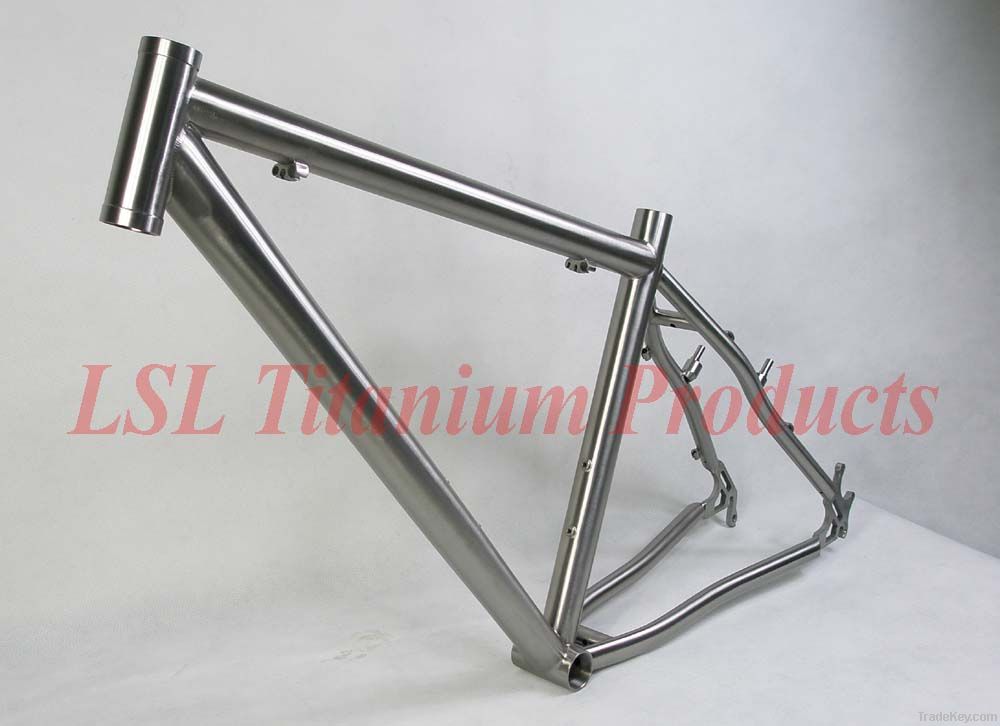
A major factor in any design is the perception people have of it. Many people have the view of Chinese produced products as being cheap and therefore of low quality. While for many products this stereotype may be true, it certainly cannot be applied to all. Some manufactured products from the Far East such as the "LSL Titanium Frame" are very high quality and yet come at a price much lower than some "home" equivalents. 


Overall the future of skilled traditional manufacturing has a mixed outlook. Products of high quality are still valued greatly and people are willing to invest in them. However, with the lack of enthusiasm for learning the skills required there is a danger of these methods dying out sometime in the future, which I believe would be a sad day in the history of manufacturing.